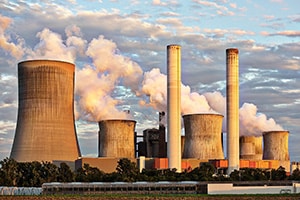
 Last month, the Environmental Protection Agency (EPA) published a new rule which would limit the carbon pollution of new coal-burning power plants. EPA Administrator Gina McCarthy announced the proposed rule in Q4, 2013. However, it took officials several months to finalize the rule before making it available to the public. You can now access and view the new carbon emission rule proposed by the EPA at www.federalregister.gov.
What’s The Scoop?
The newly proposed bill requires all new coal-burning power plants to limit their carbon dioxide emissions to 1,110 pounds per megawatt-hour. According to some estimates, the average U.S. coal-burning power plant emits roughly 1,700 pounds of carbon dioxide per megawatt-hour, which is a substantial amount more than the limit proposed in the rule.
But the EPA rule doesn’t end with coal-burning power plants. Depending on their size, new natural gas power plants in the U.S. must limit their carbon dioxide emissions to 1,000-1,100 pounds per megawatt-hour.
It’s important to note that the proposed rule would only affect new coal-burning and natural gas power plants in the U.S. Any pre-existing plants in operation may continue to operate without limiting their carbon dioxide emissions. A coal-burning power plant that emits 2,000 pounds of carbon dioxide per megawatt-hour may continue to do so, assuming it’s already operational. If the bill passes, however, all future coal-burning and natural gas power plants must follow these guidelines.
The EPA is accepting comments from industry workers and the public about the newly proposed rule until March 5 2014.
Why Some People Aren’t Backing The EPA’s Rule
If passed, the EPA rule would make it increasingly difficult for new coal-burning power plants to be built in the U.S. In order to legally operate under the new rule, coal-burning power plants must capture 20-40% of their carbon emissions and store it underground. This process, known as carbon capture and storage (CCS) is still in development and not ready for widespread use.
Some people are also concerned how the new rule will affect the coal industry in the U.S. By placing more restrictions on coal plants, it’s bound to have a negative impact on the number of jobs.
Senator John Barrasso said the following in regards to the EPA’s proposed rule:
“The EPA just announced another regulation that will increase poverty in coal country. In addition to contradicting current law, this new regulation will put more Americans out of work and make it even harder for people to provide for their families.”
How do you feel about the new EPA rule? Let us know in the comments section below!



 It’s been nearly three weeks since the devastating
 Time is of the essence when it comes to containing and cleaning spills in the workplace. Earlier this month, 300,000 West Virginia residents were left without drinkable tap water when 7,500 gallons of a coal-cleaning chemical leaked out of a storage tank before ending up in the Elk River. You can read more about the
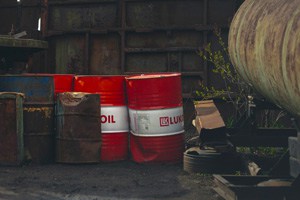 Some people assume that only massive, large-scale oil spills, such as the Deepwater Horizon incident, are hazardous. However, even minor spills in the workplace create a dangerous situation that workers need to be aware of.
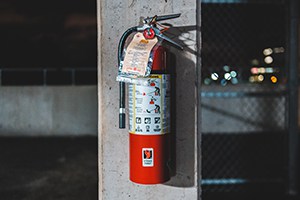 Portable fire extinguishers offer a fast and effective way for individuals to put out small fires. When a fire breaks out — whether it’s at your home or workplace — one of the first things you should do is grab the fire extinguisher.
 Ergonomics is a topic that’s oftentimes overlooked or misunderstood among employers. Whether your workplace is a typical office setting or an industrial factory, you should carefully analyze ergonomics to ensure workers are given a safe, healthy environment to perform their professional duties.
 Volatile organic compounds (VOCs) are carbon-based compounds (hence the name) which possess a high vapor pressure at ‘normal’ temperature and humidity levels.