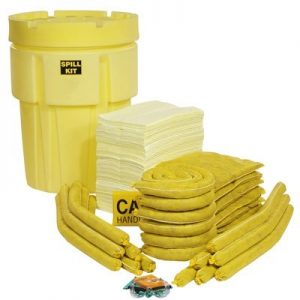
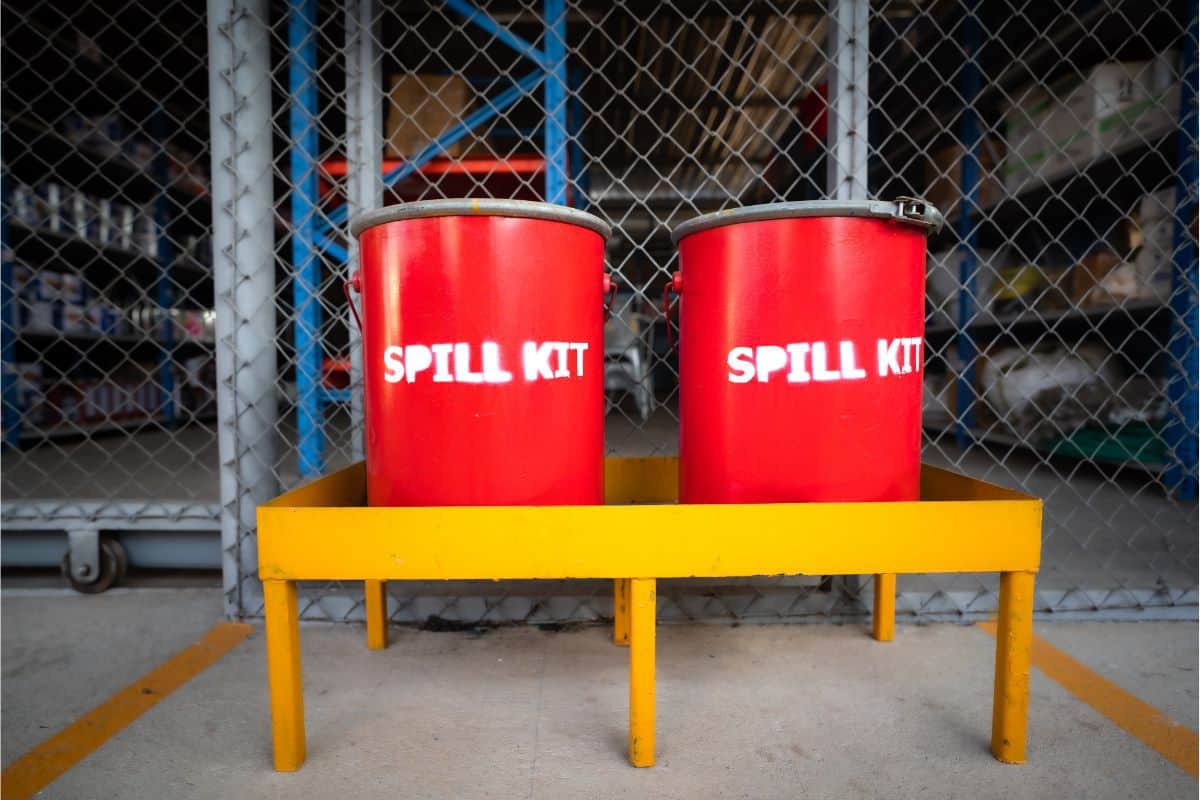
Why a Spill Kit Alone Is Not a Complete Spill Response Plan
A spill kit is an essential first line of defense — but it is one component of a complete spill response plan, not the entire plan. Facilities that rely solely on a spill kit without containment booms, secondary containment infrastructure, written procedures, and trained personnel are leaving significant gaps in their compliance posture and their actual ability to control a serious spill event. Under 29 CFR 1910.120 (HAZWOPER) and 40 CFR 112 (SPCC), a complete spill response program requires documented procedures, appropriate equipment for your specific hazards, and personnel trained to use that equipment effectively. This guide walks through how to combine spill kits and containment booms into a layered response system that satisfies regulatory requirements and actually works in a real emergency.
Understanding the Two Layers of Spill Response
An effective spill response plan operates on two distinct layers that work together:
Layer 1 — Immediate Containment
The first priority in any spill event is stopping the spill from spreading. Every second a spill travels toward a floor drain, a doorway, or a waterway increases your liability and your cleanup cost. Immediate containment tools include:
- Absorbent socks — placed around the spill perimeter within the first 30 seconds to create a containment boundary
- Floor drain plugs and drain covers — deployed immediately to protect floor drains before the spill reaches them
- Spill berm dikes — placed at doorways and transitions to prevent spill migration between areas
- Containment booms — deployed on water surfaces, in drainage channels, or around outdoor spills to prevent liquid from spreading across a larger area
Layer 2 — Cleanup and Recovery
Once the spill is contained, cleanup begins. This is where absorbent pads, spill kits, and disposal supplies come in:
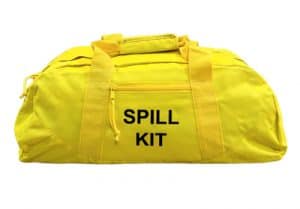
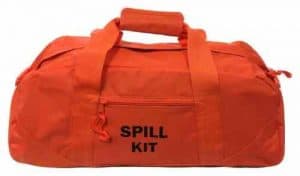
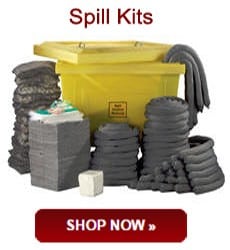
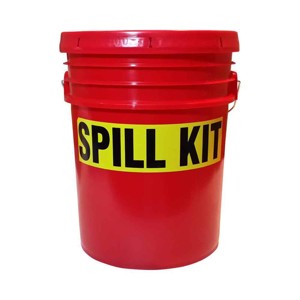
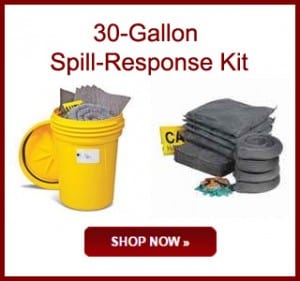
- Spill kits — pre-assembled with the right absorbents, PPE, and disposal supplies for your liquid type
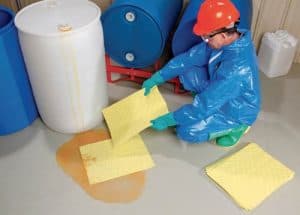
- Absorbent pads and rolls — applied to the contained spill area to absorb the liquid
- Absorbent pillows — for sumps, corners, and confined spaces where pads are hard to place effectively
- Hazardous waste containers — for proper disposal of all used absorbents and contaminated materials
The critical mistake most facilities make is skipping Layer 1 and going straight to Layer 2 — grabbing absorbent pads and trying to clean up a spreading spill without first containing its perimeter. This approach wastes supplies, takes longer, and dramatically increases the risk of the spill reaching a drain or adjacent area.
Containment Booms: The Most Underused Tool in Industrial Spill Response
Most EHS managers are familiar with spill kits. Far fewer have containment booms staged and ready — even in facilities where they are clearly needed. Here is where booms are essential and how to choose the right type:
Absorbent Booms for Land and Water
Absorbent booms are cylindrical absorbent sock-style products designed to both contain and absorb liquid simultaneously. They are the right choice for:
- Outdoor spills on paved surfaces where the spill area is large and irregular
- Spills on water surfaces at marinas, docks, and stormwater ponds — oil-only booms float and absorb petroleum while repelling water
- Drainage channel and ditch applications where liquid is flowing and needs to be both stopped and absorbed
- Around the perimeter of large indoor spills where standard socks don’t provide enough capacity
Choose oil-only absorbent booms for petroleum spills on water, universal booms for water-based chemical spills, and hazmat chemical booms for aggressive chemical applications.
Non-Absorbent Containment Booms for Large Water Spills
Non-absorbent containment booms are floating barriers designed to contain a spill on a water surface without absorbing it — keeping the liquid concentrated in one area so it can be recovered by skimming or vacuum. These are the right choice for large volume releases on open water where absorbent capacity would be quickly overwhelmed. They are widely used at marinas, ports, industrial waterfront facilities, and stormwater retention ponds.
Building Your Written Spill Response Plan
Equipment without a written plan is only half the requirement. Under 29 CFR 1910.38, every facility must have a written Emergency Action Plan that includes spill response procedures. Under 40 CFR 112, facilities subject to the SPCC rule must have a written SPCC plan that documents secondary containment and spill response measures. Here is what your written plan must cover:
Spill Notification Procedures
Who gets notified when a spill occurs, in what order, and how? Your notification chain should include:
- Immediate supervisor or EHS manager
- Facility emergency coordinator
- Local emergency planning committee (LEPC) if required under EPCRA Section 304
- National Response Center (1-800-424-8802) for releases above CERCLA reportable quantities
- State environmental agency for releases to water or soil above state thresholds
Response Authorization Levels
Not every employee should respond to every spill. Define clear authorization levels:
- Incidental spill response: Small releases of non-hazardous or low-hazard materials that can be cleaned up by any trained employee using standard spill kit supplies
- Hazardous spill response: Releases of hazardous materials requiring HAZWOPER-trained First Responder Operations level personnel minimum
- Emergency response: Large releases, unknown materials, or situations involving vapor generation or fire risk — requires evacuation and response by trained hazmat personnel or outside emergency responders
Equipment Inventory and Locations
Your written plan must document where all response equipment is located. Include a facility map showing the location of every spill kit, boom deployment point, drain plug station, eyewash station, and PPE storage location. This map should be posted at facility entrances and included in new employee orientation.
Step-by-Step Response Procedures by Spill Type
Write a specific procedure for each major spill scenario in your facility — oil spill in the maintenance bay, chemical spill in the storage room, outdoor fuel spill near a storm drain, spill reaching a waterway. Each procedure should specify: who responds, what PPE is required, which equipment to use, the sequence of actions, disposal instructions, and documentation requirements.
Disposal and Documentation Requirements
Every spill event must be documented regardless of size. Your spill report should capture: date and time, location, material and estimated volume, cause, responders, actions taken, disposal method, and any regulatory notifications made. Keep spill reports for a minimum of 3 years — they are reviewable during OSHA and EPA inspections and are essential for demonstrating an active, maintained spill response program.
Spill Response Plan for Marina and Waterfront Facilities
Marina and waterfront facility operators face an additional layer of regulatory complexity. Oil releases to navigable waters are prohibited under Clean Water Act Section 311 regardless of volume — even a visible sheen on the water surface constitutes a discharge. Marina-specific spill response requirements include:
- EPA Vessel General Permit (VGP): Marinas providing vessel maintenance must have spill response equipment appropriate for the fueling and maintenance operations conducted.
- SPCC applicability: Marinas storing oil above SPCC thresholds must have a written SPCC plan with secondary containment and spill response procedures.
- Boom deployment capability: Any marina with fuel dispensing should have oil-only absorbent booms and containment booms immediately accessible at fuel docks for rapid water surface deployment.
- Bilge management: Vessels with oily bilge water require bilge booms to absorb petroleum before bilge water is discharged — discharging oily bilge water is a federal violation under 33 USC 1321.
Browse AbsorbentsOnline’s complete marine and marina spill response products including absorbent booms, containment booms, bilge booms, and sweeps specifically designed for water surface applications.
Training Requirements for Your Spill Response Team
A written plan and staged equipment provide no protection if the people responsible for executing the plan are not properly trained. OSHA training requirements vary by response level:
- First Responder Awareness (FRA): Minimum for any employee who may discover or witness a hazardous material release. Covers recognition, notification, and evacuation — not hands-on response.
- First Responder Operations (FRO): Required for employees who take defensive action to contain a hazardous substance release without stopping the source. This is the minimum level for most industrial spill response team members.
- Hazardous Materials Technician: Required for employees who take offensive action — approaching the point of release to stop it. Required for responses to large or aggressive chemical releases.
All HAZWOPER training must be documented with employee name, training date, topics covered, and trainer credentials. Annual 8-hour refresher training is required to maintain FRO and Technician certifications.
FAQ: Building a Complete Spill Response Plan
Does every facility need a written spill response plan?
Any facility with 10 or more employees must have a written Emergency Action Plan under 29 CFR 1910.38. Facilities handling hazardous substances must also have an Emergency Response Plan under 29 CFR 1910.120. Facilities storing oil above SPCC thresholds need a written SPCC plan under 40 CFR 112. Most industrial facilities trigger at least one of these requirements.
What is the difference between an absorbent boom and a containment boom?
An absorbent boom both contains and absorbs liquid — it soaks up the spilled material as it forms a barrier. A containment boom forms a barrier only — it keeps liquid from spreading without absorbing it, allowing the contained liquid to be recovered by other means. Use absorbent booms for smaller spills where full absorption is practical. Use containment booms for large volume spills where absorption capacity would be quickly overwhelmed.
How often should spill response drills be conducted?
OSHA recommends annual spill response drills for all facilities with written emergency response plans. HAZWOPER-covered facilities should conduct drills sufficient to ensure all trained responders maintain proficiency. Drill records should be documented and retained — they demonstrate an active, maintained program during inspections.
Can I use the same boom for petroleum and chemical spills?
Only if it is a universal or hazmat-rated boom. Oil-only booms are hydrophobic and designed exclusively for petroleum products — they will not effectively contain water-based chemicals. Use hazmat chemical booms for aggressive chemical applications and universal booms for water-based liquid spills.
What documentation do I need to keep after a spill event?
At minimum: spill incident report (date, material, volume, cause, actions taken), disposal documentation (waste manifest if hazardous waste was generated), regulatory notification records if applicable, and restocking records showing supplies were replaced. Keep all spill documentation for at least 3 years.
Build Your Complete Spill Response Program Today
AbsorbentsOnline supplies everything needed to build a complete, layered spill response program — from spill kits and absorbent pads to absorbent booms, containment booms, drain plugs, containment berms, and hazardous waste containers. Need help designing a response plan tailored to your specific facility and chemicals? Call us at (800) 869-9633 — our team has been helping EHS and safety managers build compliant spill response programs since 1985.
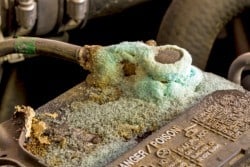
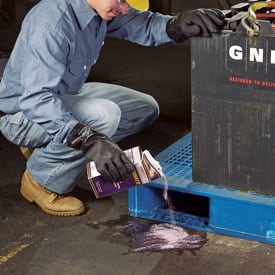
 Have questions about which acid spill kits are right for your needs?