On Thursday morning, West Virginia governor Earl Ray Tomblin declared a state of emergency in the wake of a massive chemical spill of 4-Methylcyclohexane Methanol in the Elk river. Due to the size and scope of this spill, President Obama also stepped in to offer federal help, expanding the emergency declaration from five counties to nine.
Nearly 300,000 West Virginia residents are being told to completely avoid the municipal tap water system until the spill has been properly cleaned. This means no bathing, brushing teeth, making coffee, and of course no drinking the tap water. Governor Tomblin stated that tap water form these nine counties should only be used to flush the toilet and put out fires.
Local police officers stood guard around supermarkets and convenience stores as residents rushed to buy bottled water. “Right now, our priorities are our hospitals, nursing homes and schools. I’ve been working with our National Guard and Office of Emergency Services in an effort to provide water and supplies through the county emergency services offices as quickly as possible,” said governor Tomblin.
The National Guard is also preparing to enter the region for support. Their goal is to aid residents by providing them with fresh bottled water along with food and other necessary supplies.
So, just how much of a danger does the chemical spill pose to residents? The chemical, 4-Methylcyclohexane Methanol, is used in the production of coal. A spokesperson from the state’s Environmental Protection Department said that while 4-Methylcyclohexane Methanol isn’t toxic, it is harmful if ingested. And since the Elk river is one of the region’s main water sources, there’s a good chance of this potentially harmful chemical reaching tap water supplies.
According to reports, the 4-Methylcyclohexane Methanol foaming agent began leaking from a 48,000-gallon tanker upstream at a nearby chemical storage facility. Officials have yet to disclose the amount of chemical leaked into the river. Scientists and crews are currently examining the area to determine the best possible course of cleanup. As you can see in the photo above, booms are being used to help contain the chemical spill.
Unfortunately, incidents such as this are an all-too-common occurrence. There’s no word yet on the total cost of this spill, but it will likely go well into the millions, as businesses are closed, schools are closed, and the National Guard is sent in for help.
 Volatile organic compounds (VOCs) are carbon-based compounds (hence the name) which possess a high vapor pressure at ‘normal’ temperature and humidity levels.
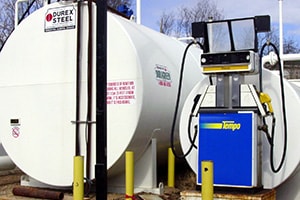 Aboveground storage tanks (AGT) are frequently used to hold everything from gasoline and diesel fuel to spent oil and solvents. They offer a fast, safe and effective way to store large amounts of potentially hazardous chemicals.
 Minor oil spills are a common occurrence in the workplace. If you work around forklifts or heavy machinery, chances are you’ll experience an oil spill at some point. Small drops of oil can be easily cleaned with a basic rag. A worker can wipe it up with an old towel and get back to doing his or her profession.
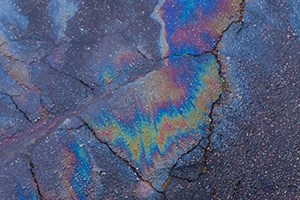 Whether it’s gas or diesel, fuel is found in just about every industrial workplace. Companies use them to power forklifts, trucks, transportation vehicles, and a wide range of heavy equipment. Because it’s such a commonly used chemical in the workplace, there’s a high risk for spills. This is why it’s important for companies to take the necessary precautions to protect themselves against spills, along with creating a plan for containing and cleaning fuel in the event that a spill occurs.
 In a previous blog post, we talked about some of the
 A hazardous communications plan (HAZCOM for short) is a comprehensive document which outlines vital information regarding a company’s safety practices, chemical labeling, training and potential workplace hazards.
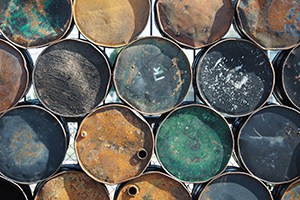 Fuel is both flammable and toxic to the environment, which is why companies need to safely store it where there’s little-to-no chance of a spill. Allowing fuel to spill or even drip in the workplace creates a dangerous scenario for nearby employees. If someone were to slip and fall on an area that’s slick with fuel, the company could be held liable for their injuries.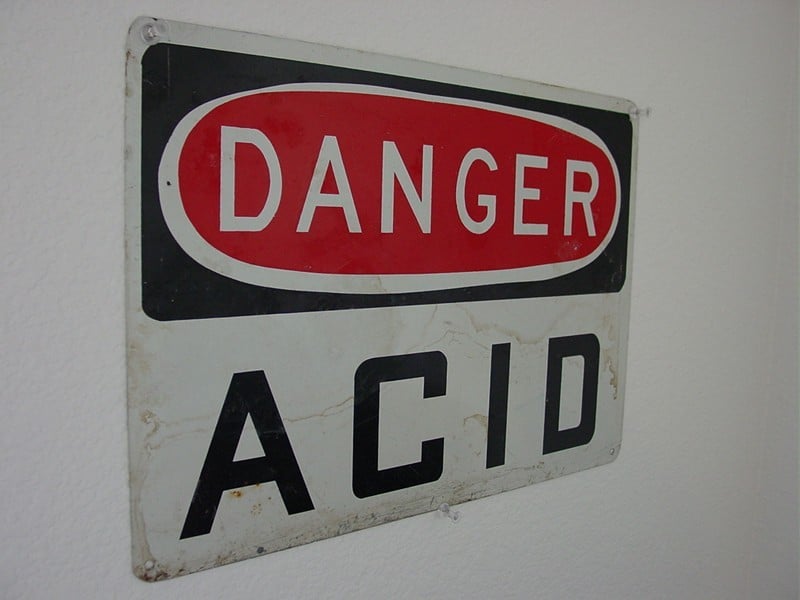
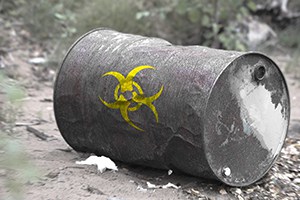 It’s important for companies to fully understand the definition of ‘hazardous waste’ in order to provide a safe, EPA-compliant workplace that’s not a threat to workers or the environment. But what exactly is the definition of hazardous waste? And what steps should companies take to prevent the chance of spills and accidents from occurring? To learn the answers to these questions and more, keep reading.